

My rating: 8/10
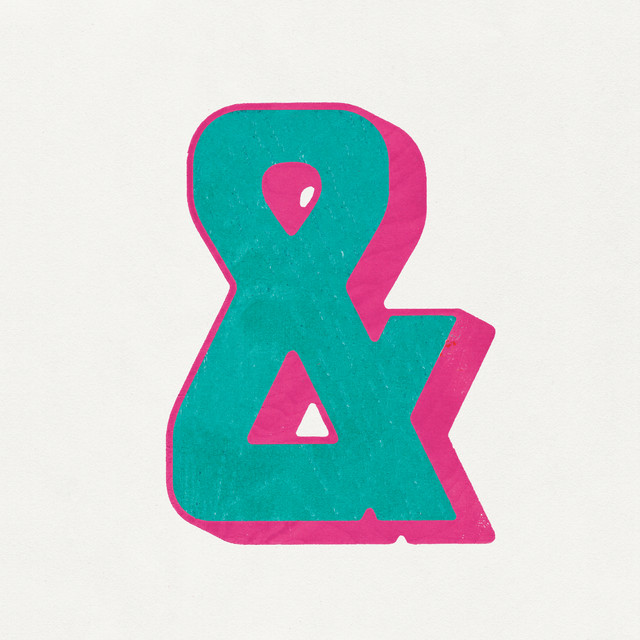
Bastille rose to fame with their single ‘Pompeii’, which was released in 2013 and reached number two on the UK Official Chart. Since their moody and dark first album All This Bad Blood, released the same year, Bastille has explored a variety of styles, including the more upbeat Wild World (released in 2016), the concept album Doom Days (released in 2019), and the futuristic and electronic Give Me the Future (released in 2022). “&” (Ampersand), released at the end of 2024, is a solo project of Dan Smith, lead singer and songwriter, released under the Bastille name. It is one of their most stripped-back and raw albums yet, and is unique in its inclusion of “story songs”, as Smith calls them, describing “people who I think are fascinating, and whose lives really spoke to me”.1 There is much to unpack in this album, from the lyrics to the accompanying music, and interestingly, to me, it is the most similar yet to their original style in All This Bad Blood, which is what made me fall in love with their music in the first place. Having said that, although having been a slight (major!) Bastille fan since about 2013, I endeavour to be objective when reviewing this album.
Atmosphere
As an album, “&” creates a calm and tranquil atmosphere. This is achieved with the use of pensive and melancholic strings (a bonus for me, as a string player!), for example in ‘Leonard & Marianne’, ‘Essie & Paul’ and ‘Red Wine & Wilde’ to name a few, combined with Smith’s gentle and often subdued vocals accompanied with haunting backing harmonies. Soothing instrumentation accompanies the strings, including piano, for example in ‘Telegraph Road 1977 & 2024’; simple yet effective acoustic guitar, such as in ‘Seasons & Narcissus’; and moments where all instruments drop out to leave choir-like vocals, like ‘Drawbridge & The Baroness’. Often, instead of a prominent drum/bass beat which could risk interrupting the serene atmosphere, a more subtle pulse is formed using gentler timbres, such as strings, acoustic guitar, or a nonintrusive drum part such as in ‘Mademoiselle & The Nunnery Blaze’ (which, being in a triple metre and using a snare, is a lot like ‘Flaws’ from their first album). This is something the band has mastered from the beginning and helps make their songs unique: they have always experimented with different timbres, instruments and beats, often also including electronic instruments. Their versatility and constant exploration of new sounds and styles from song to song and album to album make them stand out as a band. Turning back to “&”, the peaceful atmosphere (which distinguishes it from their previous albums, which have tended to be more upbeat and lively) reflects Smith’s writing process. As he explains, “I wrote these songs at my kitchen table so they needed to sound homemade and intimate and warm.”2 Whilst the gentle nature of this album is lovely, I would say that it might not be entirely versatile in different settings, however, as a very particular mood is created.

Lyrics
One of the most intriguing aspects of the album is the clever, poignant and thought-provoking lyrics, through which Smith’s background in literature shines. With the use of metaphors and hidden meanings, for example, “So echo back my promises” in ‘Red Wine & Wilde’, the meaning is not necessarily clear on the first listen, drawing the listener in to interpret their significance. As Smith explains in the lyrics of ‘Intros & Narrators’, the first track, the album recounts “other stories” which are “more interesting” to him; “So much bigger, boldеr, braver than I’ll ever be”. That each song delves into and depicts the experiences and events of peoples’ lives makes them all the more captivating, for example, in ‘Zheng Yi Sao & Questions For Her’, the listener is invited to learn and think about the woman the track is about. The lyrics also offer philosophical musings and commentaries on society and our relationships with the world, such as the eloquent observation that “We can get so cruel when we don’t understand” in ‘Marie & Polonium’, highlighting how ignorance can cause us to act in immoral ways, and the line, “Is this real love? I think it is, do you think it is?” in ‘Seasons & Narcissus’, commenting on the enigma that is love, about how confusing yet wonderful it can be. Furthermore, the line, “Would I be who I am without the sadness in me?” in ‘Blue Sky & The Painter’ is the heartfelt realisation that sadness might simply be ingrained into the narrator’s being, something that they can never escape. These compelling lyrics add thoughtfulness and sensitivity to the otherwise beautiful melodies that they interweave with.

Classic Bastille style
Despite “&” being a solo project of Smith’s, there are several moments in the album which strike me as being very characteristic of Bastille’s sound. These include rich and resonant harmonies, such as the lovely chorus of ‘Emily & Her Penthouse in the Sky’; the deep and atmospheric opening of ‘The Soprano & Midnight Wonderings’; and the la’s at the beginning of ‘Mademoiselle & The Nunnery Blaze’, characterised by the unexpected B♮ which is the leading tone of the song’s key, C minor, and gives the melodic line a darker and more interesting colour. These remind me of the harmonies that flowed through the first album, for example, in the introductions of ‘Icarus’ and ‘Haunt – Demo’. Bastille are also masters at creating extremely striking, intimate and powerful moments where the listener is met with a wash of acapella harmonies, like the beginning of ‘Drawbridge & The Baroness’, one of my favourites on the album. Immediately capturing your attention, the lack of accompanying instruments and the richness of the vocal layers give the feeling of time standing still. This again reminds me of their first album, particularly songs such as ‘Get Home’, which similarly opens with intimate acapella harmonies, and the bridge of ‘Skulls’, in which Smith’s powerful voice mixes with resonant vocal harmonies, accompanied only by sparse electronic drum beats. To me, this is one of the most wonderful and arresting aspects of Bastille songs.
The beautiful instrumentation in “&” is also often reminiscent of All This Bad Blood, such as the mesmerising and daydream-like piano arpeggios in a high register in ‘Drawbridge & The Baroness’, reminding me of the bridge in ‘Get Home’. Similarly, the prevalence of string accompaniments throughout the album was also present in the first; see ‘Oblivion’, or ‘Things We Lost In The Fire’, for example. I love that the band’s older style seeps through, as it is so unique and characteristic of them. However, new elements and styles are also incorporated into this album which they haven’t perhaps explored as much previously, for example, the more rock-esque electric guitar in ‘Drawbridge & The Baroness’ and ‘Blue Sky & The Painter’ and the folky character of some songs, such as the simple acoustic guitar in ‘Red Wine & Wilde’ and ‘Seasons & Narcissus’. This convergence of their older style with unfamiliar sounds further proves their adaptability and desire to evolve and be creative as a band, a quality that is arguably crucial for an artist to remain fresh and avoid becoming stagnant in their style.
Talent
The power and quality of Smith’s voice are outstanding in “&”, made even more prominent by the stripped-back instrumentation. Some particularly striking moments for me include ‘Leonard & Marianne’, where his vocals gradually swell in volume and intensity, and his entrancing falsetto in ‘Drawbridge & The Baroness’ and the end of ‘Zhen Yi Sao & Questions For Her’. As well as Smith’s masterful vocals, the accompanying music is beautiful, with a gorgeous combination of instruments wonderfully arranged, sometimes even verging on classical. The strings, as already mentioned, add emotion and depth, and the glissandos in ‘Zhen Yi Sao & Questions For Her’ create an almost cinematic effect. Similarly, in the likes of ‘Telegraph Road 1977 & 2024’ and ‘The Soprano & Midnight Wonderings’, the gentle and peaceful piano creates a lovely accompaniment, contrasting with often unexpected moments of electric guitar, for example in ‘Blue Sky & The Painter’ and ‘Drawbridge & The Baroness’, as mentioned above. Overall, they are very well-written songs with balance, variation and clever interplay between the vocals and instrumentation, demonstrating Smith’s skill as a songwriter and the musical talent of the band.
Conclusion
“&” is an album of very high quality, from the lyric writing, to the arrangements, to the standard of the vocals and instrumental performance. It is unique in the way that it tells stories about people and moments in history, and yet is very characteristic of Bastille, combining some of their familiar older features with new elements. The album sets a calming mood and atmosphere, and as Dan reflected, “For me it’s been the most brilliant, fun and chilled process – while also trying to do justice to the lives of these amazing people,” and this shows.3 Dan is a masterful songwriter and Bastille is an excellent band, and my love for them has not wavered! They are unique, thoughtful, and talented musicians.
 A Musician's Corner
Leave a comment