

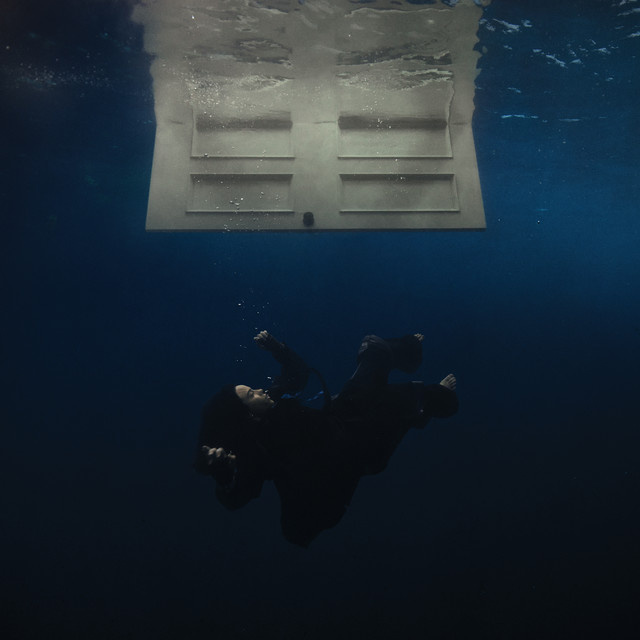
Billie Eilish, a household name at just 23 years old, has been writing and producing music with her brother, Finneas, for 10 years now. They have rapidly risen to fame since ‘Ocean Eyes’ was released on Soundcloud in 2015, mesmerising listeners with their unique, often dark, musical style and Billie’s delicate yet powerful vocals. Their latest album, HIT ME HARD AND SOFT, released in May 2024, is undoubtedly my favourite of theirs so far. It is varied and emotive, with catchy melodies and beautiful music. I believe there are factors beyond the music that draw so many people to Billie, however, namely, her appearance as a genuine, relatable and authentic individual, rather than an untouchable celebrity.
The siblings have seen great success so far, and their latest album has not let them down. Over their musical career, they have won a dazzling array of accolades, including nine Grammy Awards, four Brit Awards, two Golden Globe Awards and many more, and Billie is the first person born in the 21st Century to win an Academy Award, an incredible achievement. Her voice has been called “ethereal” (Stone, 2017) with a “beautiful and fragile timbre” (Pentreath, 2024), and several have argued that HIT ME HARD AND SOFT is her “best album yet” (Martoccio, 2024). Brown (2024) calls it “a record that whispers its way through a marvellous maze of music to deliver some big emotional wallops.”

I have to admit I played this album on repeat when it first came out! It is sensitive, heartfelt and bold, weaving through a variety of moods, from the flirty and provocative ‘LUNCH’, to the delicate and restrained ‘WILDFLOWER’.
Some other stand-out moments for me are the cheeky and sarcastic first half of ‘L’AMOUR DE MA VIE’, with its catchy melody and Billie’s effortless and perfectly satisfying vocal runs, and ‘CHIHIRO’, a song with many layers, building from controlled intensity to unleashed desperation. This track is particularly addictive, with its cool, atmospheric bassline (a feature which Finneas has mastered throughout this album and is one of my favourite elements – you can’t beat a catchy, prominent bassline in my opinion!) and the way the beat occasionally cuts out adds tension and drama.
The final track, ‘BLUE’, ties together the whole album by subtly linking back to previous songs in the album. For example, its melody is introduced at the end of the previous song, ‘BITTERSUITE’, which the line ‘I’m still overseas’ also references; ‘I thought we were the same / Birds of a feather’ is an echo of the track ‘BIRDS OF A FEATHER’; and ‘I told you a lie, désolé, mon amour’ hints at ‘L’AMOUR DE MA VIE’. I like the sense of coherence this creates in the album – it makes it seem like a journey through a labyrinth of emotions, culminating in this final track.

Finneas’ masterful production helps make this array of emotions come alive, with music that conveys the meaning of the lyrics, such as the flirty bassline accompanying the mischievous lyrics in ‘LUNCH’, or the dramatic strings and drum crashes in the climax of ‘THE GREATEST’, intensifying the feeling of desperation and anger.
Some critics have been slightly less complimentary, however. For example, Fantano (2024) describes it as “safer” and “taking less risks than her previous albums”, and Jocelyn (2024) claims that “the insistence on multipart epics and ballads kills the momentum.”
Whilst I don’t necessarily agree with these specific points, I do believe there are some slightly weaker moments in the album. For example, despite it being an incredibly successful single (reaching number two on the Billboard Hot 100, being the most streamed song on Spotify in 2024 and receiving three Grammy nominations in 2025), I don’t think ‘BIRDS OF A FEATHER’ has quite the same depth, complexity or emotional range as some of the others, and although it has a sweet melody, it doesn’t draw me in as much.
Furthermore, the first half of ‘L’AMOUR DE MA VIE’ is catchy and understated, but the second half, which switches style completely, featuring blaring synths, an electronic drum beat and heavily auto-tuned vocals, doesn’t add much to the song in my opinion. The contrast is unexpected and I like that they have experimented with structure and style, however, I think the first half would have been a great song as it was. Regardless, the album as a whole is varied and has many great tracks, and the success Billie and Finneas have seen so far must count for something!
In fact, I wanted to explore more deeply why audiences have connected with Billie and her music to such an extent. It seems that her apparent honesty and authenticity are a big factor. As Billie explained in an interview with Fadel and Harrell for NPR (2024) that,
“for [HIT ME HARD AND SOFT], I finally got over the need to prove everyone wrong… it was about expressing myself,”
and that “you should just be as vulnerable as you can without thinking about how people are going to hear it, and then go from there.” In a similar vein, Finneas told Codinha for Vogue (2024), “the thing that was really important to me was really pushing Billie to be honest.”

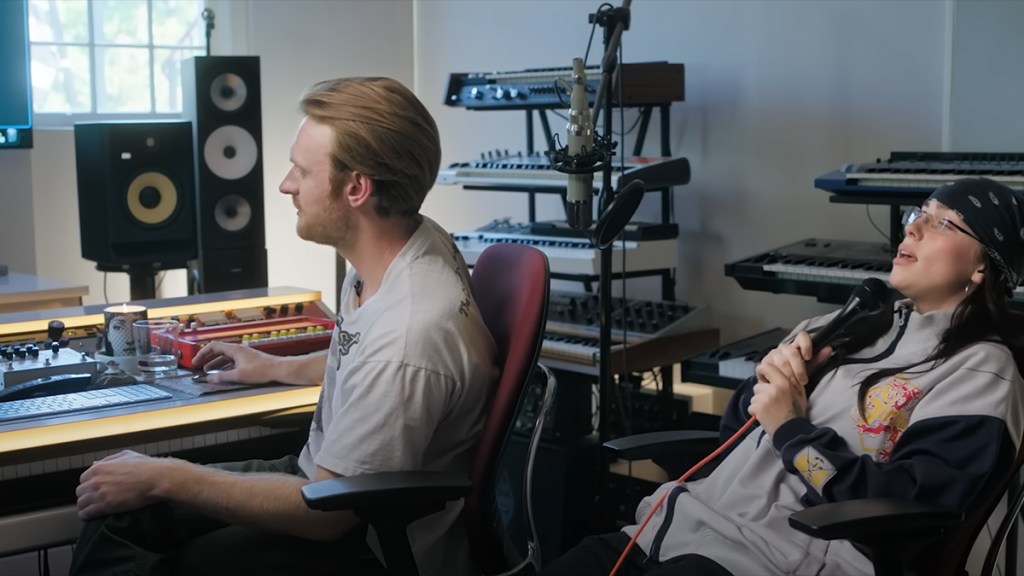
I think they have succeeded. Listening to the album, it doesn’t feel like they are trying to be something they’re not – it sounds like they simply sat down together and experimented with Billie’s vocals and different instruments. As Finneas told Martoccio (2024),
“This album was an exploration of what we do best.”
They have tackled some deeply personal and sensitive topics in the album, too, such as ‘SKINNY’, where Billie gently sings, ‘People say I look happy / Just because I got skinny’ (more on the pressure she has faced for her body image later); the disconcerting ‘THE DINER’, where she sings from the point of view of a stalker – particularly eery as Billie herself has been on the receiving end; and the heartfelt and emotional tone in her voice in ‘BLUE’ when she sings ‘I’d like to mean it when I say I’m over you / But that’s still not true’. Millar (2025) notes, “Her music mirrors the struggles of her generation: mental health, identity, and the pressures of growing up in a digital age,” and this transparency is what has drawn so many fans to the artist, making her a very relatable figure.

Similarly, when I was lucky enough to see Billie perform live in Manchester in July (I am still dreaming back to that night!) I got the impression that I was watching a down-to-earth human, rather than an “untouchable celebrity” (Millar, 2025). It wasn’t pretentious: there were minimal special effects on the stage and Billie captured the audience purely with her mesmerising voice and masterful stage presence, and she genuinely appeared to be having fun, which was contagious! This comes across in interviews, too; she doesn’t seem to be trying to impress anyone, she is just being herself, and this is so nice to see in an artist.
That Billie seems to have stayed true to herself amidst the pressures of fame, particularly at such a young age, is truly inspiring – she is only a year older than me, and I can’t even comprehend being in her position! As she has recounted in many interviews, however, it was by no means easy, and I can’t help feeling for her. She explained to Fadel and Harrell (2024) that,
“It was a lot, and it still is a lot. Every day I struggle with figuring myself out. Instead of just getting to feel how it feels to learn something about myself, I have to hear about what everyone else thinks about it.”
Especially with today’s ubiquitous and often suffocating presence of social media, Billie has struggled with the fact that “the world can see every aspect of your life and reminisce about [it]. It’s so weird” (interview with Lancaster, 2021). She has sadly suffered from depression in the midst of her fame, telling Gayle King in 2020 that “I was so unhappy last year… I was so joyless,” and that “I genuinely didn’t think I would make it to 17” (cited in Wong, 2020).
The scrutiny that Billie faces is the reason that she has concealed her body in baggy clothing (still looking incredibly cool whilst doing it!) for lots of her career. She is acutely aware of how her body could be used as a source of judgement like it unfortunately is for so many men and women in the public eye. Celebrities, particularly women, are increasingly sexualised – whether this is a message of empowerment or pressure from labels to boost sales is a debate for another time.

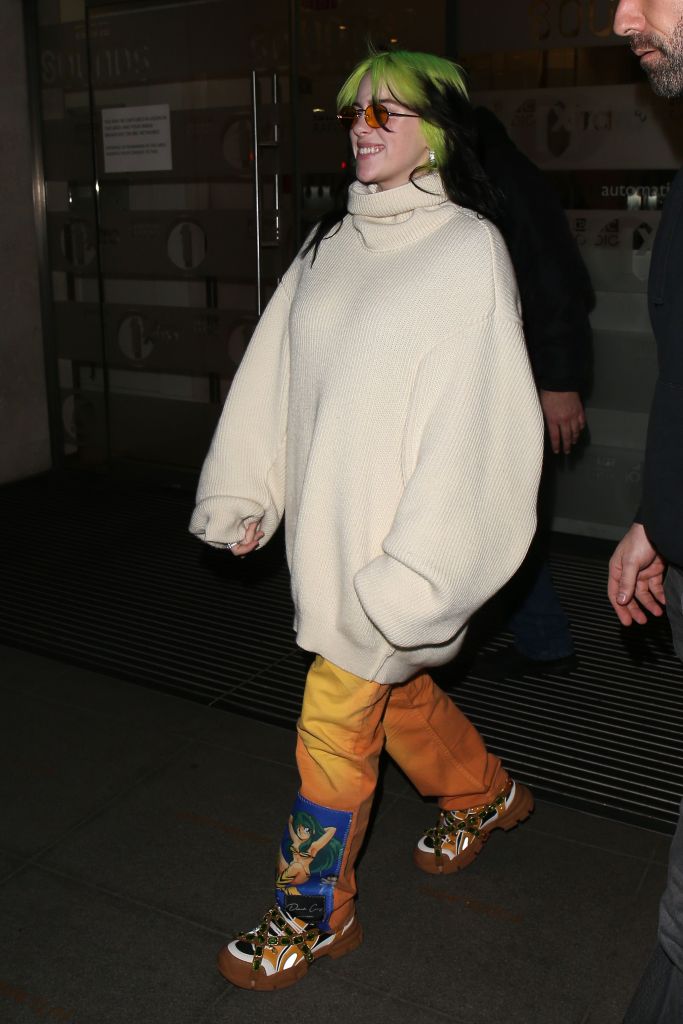
Even in baggy clothing, Billie hasn’t escaped scrutiny for her appearance. As she stated in the voiceover to her short film, NOT MY RESPONSIBILITY, shown at her 2020 world tour, “Some people hate what I wear / Some people praise it / Some people use it to shame others / Some people use it to shame me.” As Fitzgerald (2021) highlights, this is a wider societal issue: “The media bombards us with the message that happiness, self-esteem, and a positive image of ourselves is a reward for having ideal bodies.” Billie responds, saying, “Let’s turn it around and be empowered in that… Showing your body and showing your skin — or not — should not take any respect away from you” (cited, ibid.). This is a powerful message that she is sending, making it no surprise that she has been called “a force, a positive influence to a generation raised on social media” (Pippa Haupt, cited, ibid.). Her resilience and honesty must truly be applauded, and it inspires me, as I’m sure it does many others.
A highly talented artist and dynamic personality, Billie is an inspiring role model, particularly for young girls, for her rejection and resistance against what the public eye and, on a more relatable level, society, expects of her. She also serves as an important reminder that celebrities are merely human, and as audiences, fans or critics, we should perhaps treat them more gently and not expect quite so much from them all the time.

Brown, H. (2024) Billie Eilish review, Hit Me Hard and Soft: Pop star whispers her way to big emotional wallops. https://www.independent.co.uk/arts-entertainment/music/reviews/billie-eilish-hit-me-hard-and-soft-review-b2546074.html. (Accessed 22 Sep 2025).
Codinha, A. (2024) Billie Eilish Has Grown Up. https://www.vogue.com/article/billie-eilish-november-2024-cover-interview. (Accessed 5 Sep 2025).
Fadel, L. & Harrell, P. (2024) Billie Eilish finally remembers who she is. https://www.npr.org/2024/05/17/1251790138/billie-eilish-finneas-hit-me-hard-and-soft-interview. (Accessed 4 Sep 2025).
Fantano (2024) Billie Eilish – HIT ME HARD AND SOFT. https://theneedledrop.com/album-reviews/billie-eilish-hit-me-hard-and-soft-album-review/. (Accessed 5 Sep 2025).
Fitzgerald, R. (2021) Billie Eilish’s Vogue cover lays bare the hypocrisy of a culture that is killing women. https://medium.com/the-glitter-gold/billie-eilishs-vogue-cover-lays-bare-the-hypocrisy-of-a-culture-that-is-killing-women-7a80870c7ec0. (Accessed 6 Sep 2025).
Jocelyn, H. (2024) HIT ME HARD AND SOFT. https://pitchfork.com/reviews/albums/billie-eilish-hit-me-hard-and-soft/. (Accessed 5 Sep 2025).
Lancaster, B. (2021) Billie Eilish on her complicated relationship with the internet, the price of fame and the “new Billie”. https://www.vogue.com.au/culture/features/billie-eilish-on-her-complicated-relationship-with-the-internet-the-price-of-fame-and-the-new-billie/news-story/1c6e34914c93e17dd7299a8bd9aa1b5c. (Accessed 7 Sep 2025).
Martoccio, A. (2024) Billie Eilish Would Like to Reintroduce Herself. https://www.rollingstone.com/music/music-features/billie-eilish-hit-me-hard-and-soft-mental-health-fame-1235003585/. (Accessed 4 Sep 2025).
Millar, M. (2025) The Billie Eilish phenomenon: Why she’s so popular. https://www.xsnoize.com/the-billie-eilish-phenomenon-why-shes-so-popular/. (Accessed 7 Sep 2025).
Pentreath, R. (2024) How good is Billie Eilish’s singing voice, from a classical music perspective?. https://www.classicfm.com/discover-music/music-theory/billie-eilish-voice-analysis-classical-perspective/. (Accessed 4 Sep 2025).
Stone, A. (2017) Watch Billie Eilish Set Fire to a Bad Relationship in New Video for “watch”. https://www.vice.com/en/article/watch-billie-eilish-set-fire-to-a-bad-relationship-in-new-video-for-watch/. (Accessed: 4 Sep 2025).
Wong, C. M. (2020) Billie Eilish On Mental Health: ‘I Didn’t Think I Would Make It To 17’. https://www.huffpost.com/entry/billie-eilish-mental-health-gayle-king_n_5e2af414c5b6d6767fd2c89c. (Accessed 25 Sep 2025).
 A Musician's Corner
Leave a comment