


An inspiring Italian duo bring the acoustic blues to the Isle of Man
On 12th July 2025, I attended a concert by Veronica Sbergia and Max De Bernardi at the Laxey Working Men’s Institute on the Isle of Man. An Italian acoustic blues duo, Max and Veronica have performed globally with their quirky, charming sets which feature a variety of country blues, ragtime, and vaudeville songs. Extremely talented musicians, they expertly play a range of instruments from the mandolin to the washboard, and through their singing, they evoke great emotion and energy. They won the European Blues Challenge in 2013 with The Red Wine Serenaders, represented Italy in the International Blues Challenge in 2015 and have recorded several albums, with more to come. In addition to watching Max and Veronica perform, I had the privilege of meeting them beforehand and chatting with them about their lives and music, which was fascinating and highly insightful. This article will review the concert and explore some of the areas we spoke about, including their genuine passion for music and how important they believe this to be; their desire for the acoustic blues to reach a wider and younger audience; and the prejudices they have faced due to their position as Italians playing American music, an intriguing issue which I will delve into more deeply.
Concert review
The pair were a joy to watch. Their skill and infectious enthusiasm made it a truly memorable evening. Veronica’s voice is strikingly powerful and has a gorgeous, rich tone which perfectly suits the genre. Max’s incredible skill on the guitar and mandolin is mesmerising, and this, combined with his characterful vocals harmonising with Veronica’s and her unique washboard and kazoo playing, made a thrilling sonic and visual experience. To enhance the music, they told the audience about some of the history behind the songs and the stories that are told through them, which gave us a greater understanding of the music and painted vivid imagery to go along with it. The duo also interacted with the audience by encouraging us to clap and sing along, to get maximum enjoyment and appreciation from the music. From their impressive talent to the journey they took us on through the music, it was a delightful performance to watch.

Their story and recommendations for aspiring musicians
Max and Veronica originally met when Max was invited to play at the music nights run by Veronica in a bookstore. Some time afterwards, they reconnected and explored the possibility of performing together, for Veronica to sing with the other musicians Max played with. Over time, they played together more and more often until it became “like a routine.” Eventually, Veronica decided to create her own record with the help of Max, and this is what they referred to as the “beginning of everything.” The record garnered interest from a promoter in France, a moment that made them realise that
“maybe it’s possible to work with this thing and to make something out of it.”
Their achievement of winning the European Blues Challenge as a trio also helped them greatly, giving them wider recognition and allowing them to meet their agent, who booked concerts for them outside of Italy.
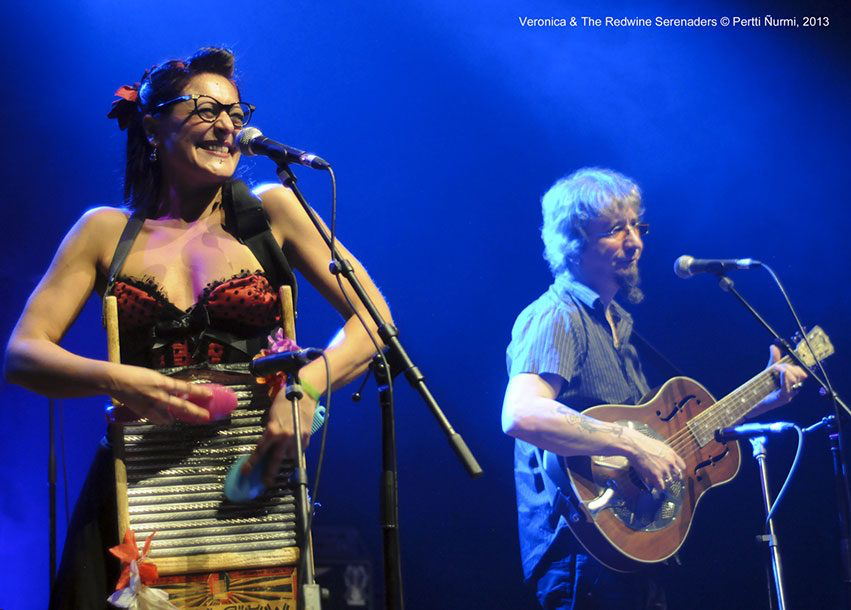
The musicians stood out by the fact that in Italy, “this type of music was not very popular” and they are “proud” of the fact that at festivals, they are frequently told that they are the only Italian artists that have played there. In fact, without claiming to be the pioneers, they noticed that more people turned to the acoustic blues in Italy, especially with a combination of guitar, washboard and other unusual instruments, after their project gained traction and they started playing abroad. They feel very “lucky” to be able to travel and play with the music they love, and are aware of the many “incredible and very talented” musicians in Italy who don’t have the chance to play abroad, as they don’t have anyone to book concerts for them outside of the country. They also highlight that the acoustic blues is sadly not very popular amongst the younger generations and are keen to raise awareness of the genre, believing that it would still have a lot of meaning to young people too. Having heard them play, I agree that more awareness should be brought to the duo, as they are incredibly talented, inspiring, and a joy to watch, but also to the genre; it has some captivating music with lyrics that tell engaging stories.
With such an incredible career behind them, I asked them if they had any advice for aspiring musicians. They recommended to “go deep deep down and find a way to express the music, find their own language.” Also, to “be different from the others, find their own spirit in music and trust in it – even when there is nothing to trust about.” Veronica says that the best piece of advice she has been given is to
“stay honest and humble, to never change who I am on stage, and to be as natural as I am in real life.”
She recognises that “authenticity is what people connect with the most.” Especially if you are young, they urged, “Do it with all your effort and all your passion – you have time later to think about.” Max and Veronica’s journey is inspirational and has lots that aspiring musicians can take away from it, including the importance of finding your own unique path, having unwavering belief in what you are doing, and never giving up.
Cultural appropriation
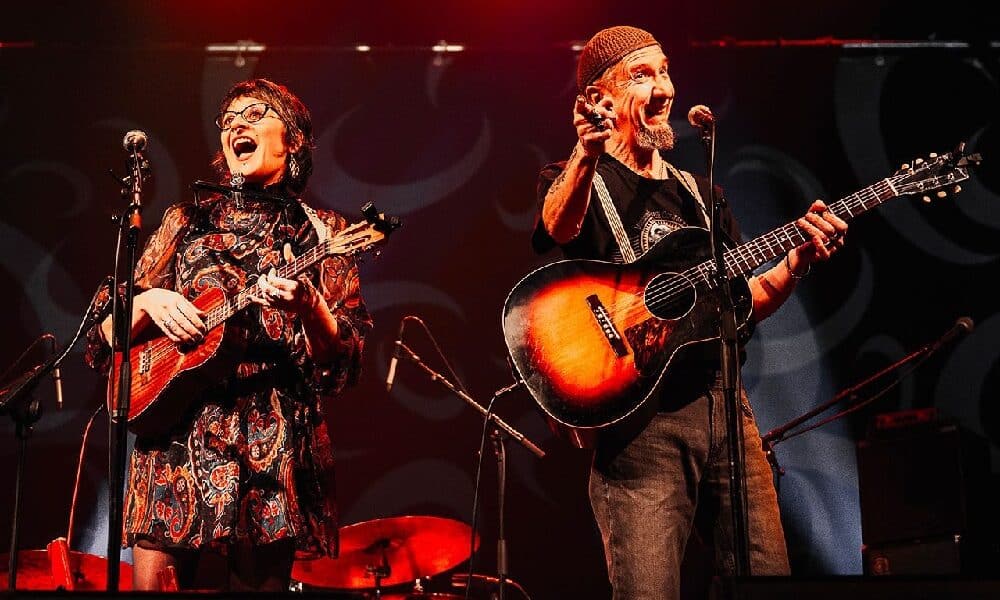
The duo have faced barriers being Italian musicians playing the music they do. As Veronica explained, there is some “stigma” around it, and some people are
“suspicious about two Italians playing American music,”
believing they “aren’t entitled” to it. They explained how promoters tend to be reluctant to book them until they have someone directly confirm to them that they are worthy. Therefore, while they acknowledge that “it is good to be Italian because it is different,” the flip side is that “we really have to work harder.” After hearing this, I decided to delve into what the reasoning behind this might be, and whether it is a wider issue. It seems that concerns surrounding the cultural appropriation of blues music extend beyond Max and Veronica and go back decades.
White performers have been called out for culturally appropriating the blues when its history rooted in black culture and the struggles that were faced in the 19th century are not acknowledged. As Handy wrote in his 1941 autobiography, Father of the Blues, “its 12-bar, bent-note melody is the anthem of a race, bonding itself together with cries of shared self victimization.” This is not to say that white artists cannot perform blues songs, however. As several authors acknowledge, it can be done respectfully, for example, Aburrow says to learn about the culture and history of the music being performed, and Hatua-Saar White encourages artists to “acknowledge the origins of where your inspiration is derived from.”1 Max and Veronica certainly do this; they have immersed themselves in and have a deep appreciation and respect for the music they play, and they provide ample acknowledgement to its history during their live performances and in the information about their albums. For example, Veronica’s album Bawdy Black Pearls explicitly brings recognition to the “fierce and fearless blueswomen of the 1920s and ’30s,” explaining that “these women sang openly about desire, pleasure, and personal freedom, challenging the social norms of their time with wit and courage.” It is therefore unjustifiable for Max and Veronica to face prejudice for playing blues music.

Conclusion
Excellent performers and fascinating people to talk to, Max and Veronica are admirable role models for aspiring musicians. They are not afraid to stand out and never give up, even when met with obstacles. I am grateful to them for introducing me to the acoustic blues and for encouraging me to investigate why there are sometimes negative reactions against musicians from one culture playing music from another culture, and how complex a topic it is. I encourage readers to explore Max and Veronica for themselves and to keep an ear out for their new gospel album coming out in November. Joined by Mauro Ferrarese and Simone Scifoni, “it’s a raw and heartfelt record – very much in line with who we are – and features a handful of lesser-known traditional songs recorded live in the studio”. It is their first album dedicated to gospel music, which they are “extremely proud of.”
- Aburrow, Y., ‘Cultural Appropriation And The Blues,’ Patheos [website], 9 October 2015, https://www.patheos.com/blogs/sermonsfromthemound/2015/10/cultural-appropriation-and-the-blues/, accessed 22 July 2025 ; Hatua-Saar White, R., ‘Cultural Appropriation in Music,’ Berklee Online [website], 1 February 2020, https://online.berklee.edu/takenote/cultural-appropriation-in-music/, accessed 22 July 2025. ↩︎
 A Musician's Corner